Transport, Meals, and Mandate: Budgeting Community Attendance in Cameroon
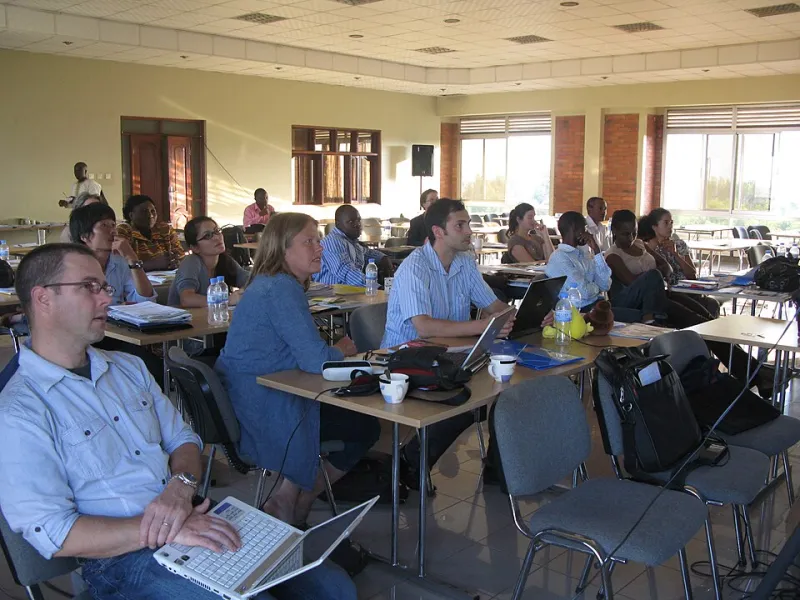
Photo: SuSanA Secretariat, CC BY 2.0, via Wikimedia Commons
A meeting is a cost center, not a mood
In many US–Cameroon partnerships, the first budget argument is not about equipment or salaries. It is about taxi fare, a plate of food, and the small sum that lets a farmer or a quarter head attend a meeting rather than miss it. These costs are real. They are also politically sensitive. A poorly written meeting-cost clause can turn participation into a payout and consensus into a receipt.
The aim is not to make attendance free for the US partner. It is to make participation possible without making it purchasable. Terms should separate the cost of showing up from the value of a decision. That distinction belongs in the partnership agreement, not in a WhatsApp thread the night before.
Separate access costs from influence costs
Use three buckets: access, hospitality, and time. Access costs are transport and communication needed to reach the meeting. Hospitality is the meal, water, and venue that make a long sitting possible. Time is the opportunity cost of a day away from a field, shop, or household. US partners usually should cover access and hospitality within agreed limits. They should be cautious about paying time as a standing per diem, because a daily payment can become a reason to attend—or to prolong—a meeting.
A useful test: would the payment still make sense if the person opposed the project? If yes, it is an access cost. If no, it is probably an influence cost.
Set thresholds before the first invitation
Thresholds should be written, simple, and tied to local conditions. Avoid a single national rate for a country as varied as Cameroon. A reasonable structure:
- Under the local transport ceiling: reimburse actual shared-transport cost with a signed traveler log; no receipt required where receipts are not customary.
- Above the ceiling or across regions: require a written estimate approved by the community liaison and the US partner before travel.
- Full-day meetings outside the home locality: provide a modest meal and water in kind, or a fixed meal allowance that does not exceed the published local rate.
- Meetings within walking distance: provide venue, water, and meal where customary; do not create a cash attendance fee.
- Multi-day workshops: cover transport, lodging, and meals at published rates; pay no additional per diem for the same day.
These are guardrails, not moral judgments. The point is to avoid both penny-pinching that excludes poor participants and cash routines that make every meeting a negotiation.
A model clause that does three jobs
The clause should authorize participation, cap the cost, and preserve the record. A model:
Meeting Participation Costs. The Partner may reimburse reasonable transport and communication costs incurred by community participants to attend activities under this agreement, subject to the thresholds in Schedule B. Meals, water, and venue costs shall normally be provided in kind. A fixed meal allowance may be paid only for full-day activities held outside the participant’s home locality and shall not exceed the local rate in Schedule B. No payment shall be conditioned on attendance at a particular session, support for a proposal, or signature of minutes. Reimbursements shall be recorded in a participation ledger showing date, purpose, amount, recipient category, and approval. The Partner shall publish a summary of meeting costs to the community at least quarterly. Payments shall not be used to compensate customary authorities for permission to meet.
That last sentence matters. In some settings, a US partner may be asked for a courtesy payment to a chief or council before a community meeting. Courtesy and permission are not the same as attendance costs. Handle any customary courtesy through the partnership’s hospitality budget and local advice, not through a per-person meeting fee.
Red flags that consent is being bought
Review meeting-cost practice for these patterns:
- Cash envelopes handed out at the door with no ledger.
- A per diem that exceeds a day’s local wage for a two-hour meeting.
- Payment tied to signing attendance sheets, minutes, or letters of support.
- Different rates for different factions, with the highest rate for the most vocal group.
- Transport reimbursements only for people who speak in favor of the project.
- No published summary of what meetings cost.
- A sudden rise in attendance after payments begin, without a corresponding rise in substantive participation.
None of these proves bad faith. But each makes it harder to tell whether the community is participating or being paid to appear.
Administer the small money like big money
Use mobile money where it is the local norm, but keep the same controls: named payee, purpose, approval, and reconciliation. Where receipts are unavailable, use a witness signature and a simple traveler log. Protect participants’ privacy: do not publish names and amounts on a public notice board. Publish totals by category and meeting.
US funders often ask for documentation that matches their own grant terms. Build that documentation at the meeting level rather than reconstructing it at year-end. A one-page participation ledger is cheaper than a forensic exercise.
The lasting test
A good meeting-cost term does not make participation free. It makes the cost visible, bounded, and separate from the decision. When a US partner can say, plainly, we paid for the bus and the meal, not for the vote, the partnership has a better chance of lasting after the project budget is gone.