The Consent Ledger: Who Controls the Story of a Cameroon Partnership?
The photograph after the grant report
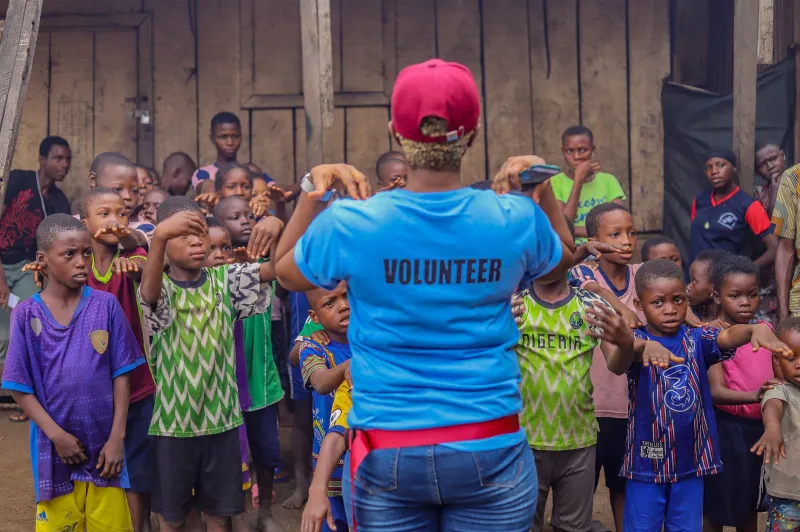
A familiar image travels from Cameroon to a US boardroom: children smiling beside a new water point, a clinic wall freshly painted, a banner naming the funder. The image is efficient. It satisfies a report, anchors a fundraising appeal, and reassures a donor. It can also flatten a partnership into a before-and-after story in which the community appears only as recipient. As US organizations deepen ties with Cameroonian associations in 2026, the terms of storytelling deserve the same scrutiny as budgets and governance.
Term Together Cameroon takes the view that documentation is part of the partnership agreement, not a public-relations layer applied afterward. Consent, narrative ownership, review rights, and image use are not gestures of courtesy. They are operating terms that determine whether a community trusts its partner with its story.
Why donor-centric documentation persists
US fundraising and grant reporting reward visible outcomes. A program officer may ask for photographs; a communications team may need a success story; a diaspora board may want proof that remittances and grants produced change. These pressures are real, and they are not inherently unethical. The problem arises when the funder's need for evidence becomes the community's obligation to perform gratitude.
In rural and peri-urban Cameroon, the imbalance can be subtle. A local coordinator may hesitate to refuse a photographer. A translator may soften a request. A chief may agree because saying no feels risky. The resulting image may be technically consensual but substantively shaped by unequal power. Ethical storytelling terms anticipate that gap rather than pretending it does not exist.
Four terms that change the frame
Consent as a process, not a signature
A single release form signed at the end of a visit is weak evidence of consent. Stronger terms describe how consent is sought, in which language, by whom, and at what point. They allow a household or association to approve a specific use—annual report, website, social media, direct mail—rather than signing away all future use. They also record who can withdraw consent and what happens to archived material.
Narrative ownership and attribution
Communities should not be reduced to case studies. Terms can specify that the partnership's story is jointly owned, that local names and institutions receive credit where appropriate, and that the funder will not invent causation it cannot support. A simple clause can require that any public narrative distinguish between what the funder financed, what the community contributed, and what other partners delivered.
Review rights with realistic timelines
Review is meaningless if it is impossible. A US communications team may want a two-day turnaround; a Cameroonian community group may meet weekly and rely on intermittent connectivity. Terms should set a review period that reflects local rhythms, name the reviewer, and define what counts as approval. The goal is not to slow every post. It is to prevent surprises.
Image use and withdrawal
Image terms should cover more than copyright. They should address dignity, context, minors, and future reuse. A useful clause limits cropping that changes meaning, prohibits use in partisan campaigns without separate consent, and gives subjects a path to request withdrawal. Withdrawal cannot undo distribution, but a clear policy reduces harm and signals respect.
A practical checklist for US funders
- Map every type of content the partnership may produce: photos, video, audio, quotes, case studies, social posts.
- Identify the consent holder for each type and the language of consent.
- Separate operational documentation from public storytelling.
- Set review windows that match local meeting and connectivity realities.
- Define credit lines before the first shoot.
- State how minors are protected and when guardian consent is required.
- Record withdrawal requests and name the person responsible for acting on them.
- Budget for local translation and for a community liaison, not only a photographer.
- Review the terms annually, not only at project launch.
Sample language for a storytelling annex
The partnership may document project activities for internal learning and public communication. Before any photograph, recording, or personal story is collected for public use, the partner will explain the intended audience and platform in the relevant local language. Consent will be specific to that use and may be withdrawn by the individual or association named in the consent record. The community partner will have a minimum of ten business days to review proposed public narratives that identify the community or its members. Attribution will name the community partner where the partner requests it. Images will not be altered in ways that change their meaning or imply outcomes not documented in project records.
Trust is the deliverable
A partnership that controls its own story is more likely to speak plainly about failure, delay, and disagreement. That candor is valuable to US funders because it surfaces problems before they become crises. Ethical storytelling terms do not weaken accountability. They make accountability reciprocal. In 2026, the most credible Cameroon partnerships will be known not only for what they built, but for how they let communities describe it.