Continuity Before Connectivity: Power and Network Terms for US–Cameroon Partnerships
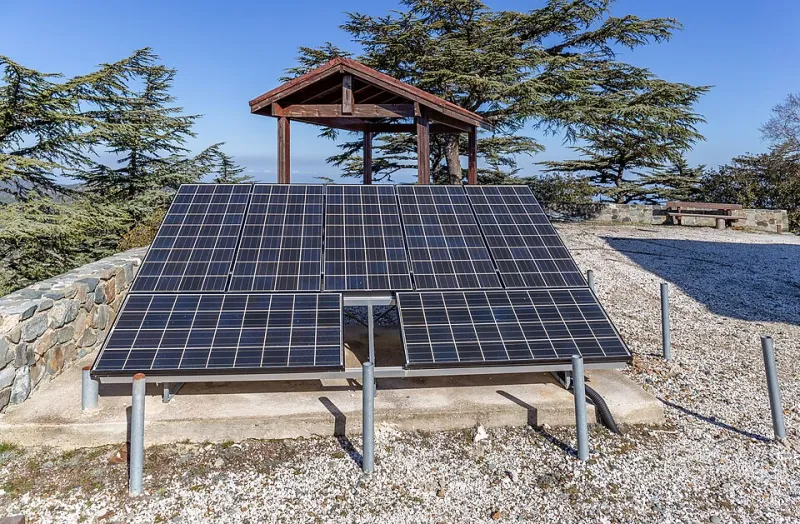
Photo: Michal Klajban, CC BY-SA 4.0, via Wikimedia Commons
The Assumption Hidden in a Clean Budget
Most US-side budgets arrive in Cameroon with an invisible line item: the expectation that electricity will hold and that a mobile data connection will carry a video call. In practice, a transformer fault in Douala, a fiber cut on the road to Yaoundé, or a week of heavy rain can interrupt the routine that partnership terms depend on — the Friday report, the monthly transfer, the community meeting where consent is documented.
The term sheet is the right place to address this. Not with a vague promise to “account for connectivity challenges,” which resolves nothing, but with defined standards, defined delays, and defined costs. The aim is continuity: the partnership keeps its obligations visible and its decisions documented even when the grid does not cooperate.
Define the Standard, Not the Brand
A common drafting error is to name equipment in the agreement — a specific inverter, a particular router, a generator of a given capacity. Equipment specifications age quickly and can quietly shift procurement away from local suppliers who stock and service different models.
A sturdier approach sets a performance standard and leaves selection to the implementing partner. For example: “The partner shall maintain backup power sufficient to run the project office’s core functions — lighting, one computer, one printer, and charging for communications devices — for a minimum of eight hours.” Or: “The partner shall maintain at least two independent channels for voice communication, at least one of which does not depend on the local electricity grid.”
This keeps the choice of solar array, battery bank, or generator where it belongs: with the people who will buy fuel, replace cells, and negotiate with a technician. It also gives US funders a measurable test without dictating a brand.
Two Clocks: Excusable Delay and Planning Gap
The hardest question in an outage clause is not whether the power failed. It is whether the failure excuses the delay. Partners and funders often talk past each other here, because one side treats an outage as force majeure and the other treats it as poor preparation.
Term sheets can separate the two with a short test. A grid failure is excusable when it is external, documented, and unforeseeable in duration. It is a planning gap when the same failure recurs on a predictable schedule and no backup was arranged. The distinction is not about blame; it is about which party absorbs the cost of the next occurrence.
A workable clause might read: “A delay caused by an interruption of public electricity or commercial telecommunications shall be treated as excusable only where the partner notifies the funder within two business days, provides a utility or carrier reference where available, and demonstrates that backup arrangements required under this agreement were in place and functioning.”
That last phrase does most of the work. It converts an argument about weather into a review of whether the agreed backup existed.
Outage-Day Budget Lines
Most budgets fund infrastructure as a capital purchase and then leave its operation unfunded. Batteries need replacement. Generators need fuel and servicing. A second mobile network subscription costs money every month, even in the months when the primary carrier performs well.
Three modest budget lines prevent most disputes:
- Backup power operation and maintenance — a monthly allowance for fuel, servicing, or battery replacement, scaled to the equipment actually installed.
- Redundant connectivity — a second SIM or a fixed-line backup, with an explicit note that the cost continues for the full term.
- Outage-day meeting costs — a small contingency for rescheduling community meetings, hiring transport when a virtual session fails, or renting a venue with a working connection.
These lines are small relative to most program budgets, and they signal that the funder has read the operating context rather than only the capital plan.
Reporting When the Signal Drops
Reporting deadlines drafted in Washington or New York rarely account for a partner whose connection disappears for three days. The fix is not to lower reporting standards but to build a fallback sequence into the terms.
A practical clause establishes a primary digital submission channel; a secondary channel by voice or SMS confirmation; and a standing rule that a report sent within 48 hours of restored connectivity is deemed timely if the outage is documented. The partner should be able to satisfy the requirement with a screenshot, a carrier notice, or a brief written log. Requiring formal utility certification for a two-day delay is disproportionate and, in rural areas, often impossible.
The same logic applies to approvals. If a funder’s sign-off is needed for a purchase and the funder’s own connectivity fails, the delay should not be charged to the partner. Mutuality matters in a term sheet; a one-sided outage clause reads as distrust.
A Short Checklist for the Term Sheet
Before signing, both parties can confirm the following:
- Backup power is described by performance standard, not brand, with a defined minimum runtime for core functions.
- Responsibility for fuel, servicing, and battery replacement is assigned, with a budget line for each.
- At least two communication channels are named, and at least one does not rely on the public grid.
- Excusable delay requires notice, documentation, and evidence that agreed backup was functioning.
- Reporting deadlines include a restoration window and a simple documentation standard.
- Approvals delayed by the funder’s own outage are treated the same as partner delays.
- The partner holds final selection authority over equipment, subject to the performance standard.
- Data backup responsibilities — local drive, cloud, or both — are named.
Local Custody of the Infrastructure
The deeper principle is custody. Equipment installed under a partnership will outlast the funding cycle, and the people who maintain it should be the people who chose it. A US firm or diaspora group can set the standard, fund the operation, and ask for evidence. It should not select the inverter.
When the terms are written this way, an outage becomes an ordinary operational event rather than a contractual crisis. The lights go out, the backup runs, the report goes out a day late with a note attached, and the partnership continues. That is what continuity means in practice — not the absence of disruption, but an agreement that already knows what to do when it arrives.