Many Hands, One Signature: Structuring US–Cameroon Partnership Terms Around Cooperative Bodies
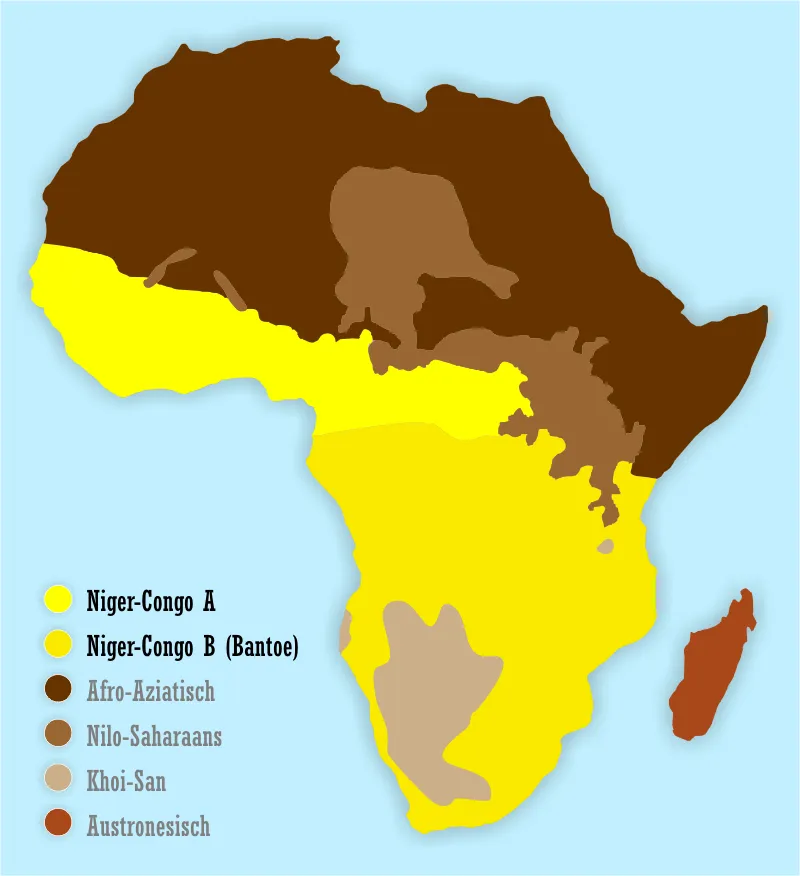
Photo: Mark Dingemanse at Dutch Wikipedia, CC BY 2.0, via Wikimedia Commons
Most US organizations arrive at a Cameroon partnership with an entity in mind that resembles the ones they know at home: a registered body with a bank account, a governing board, a defined signatory, and minutes filed somewhere. Reality is usually more textured. A rural community may express its interests through a farmer cooperative, a savings circle, a women's association, a development committee, or some combination of all four — each with its own decision rules, its own record-keeping habits, and its own sense of who is allowed to speak for the group.
The temptation is to compress all of that into a single counterparty and move on. The better approach, and the one this site has argued for consistently, is to write terms that fit the body you are actually contracting with. Shared terms, local progress, lasting community — in that order.
The Counterparty Is Usually Not the Community
A common drafting error is to name "the community of X" as the partner while signing with a cooperative that represents perhaps half of it. The agreement then promises benefits to a population it has no authority to bind, and it grants authority to a group that cannot speak for everyone.
A more defensible pattern is to name the specific legal or customary body as the counterparty, define the community it serves in an annex, and state plainly what the partner can and cannot commit on behalf of others. Where a second body — a traditional council, a municipal authority, a land-owning lineage — holds power over a component of the project, name it as a consulted party rather than pretending the cooperative covers it.
Three Bodies, Three Kinds of Authority
Farmer cooperatives and common initiative groups. Cameroon recognizes cooperatives under the OHADA Uniform Act on cooperative societies and common initiative groups under longstanding national legislation. Registration gives these bodies legal personality, a general assembly, and an elected leadership. It does not, however, make them identical to a US nonprofit or an LLC. Decision-making authority generally rests with the general assembly, exercised through periodic meetings, with day-to-day management delegated to a board or manager whose mandate is time-limited.
Savings and credit groups. Whether registered or informal, savings circles — the tontine or njangi familiar across the region — typically pool contributions, rotate payouts, and hold a written or unwritten constitution. Leadership rotates, and the treasurer rarely holds unilateral authority over funds. Terms that assume a single treasurer can sign alone will conflict with the group's own rules and will often be quietly ignored.
Informal associations. Many community bodies have no registration at all. Their authority is customary and personal, resting on elders, founding members, or a chief. That does not make them illegitimate partners; it makes the authority clauses in your agreement more important, not less.
Who Can Sign, and Who Can Bind
The single most useful set of clauses in a cooperative partnership concerns authority. Three elements do most of the work.
First, a capacity representation: the signatory warrants that they hold a current mandate from the general assembly or equivalent body, and attaches the resolution or meeting record that grants it. Second, a renewal requirement: mandates expire. Terms should require an updated resolution at defined intervals and at any change of office, rather than assuming the person who signed in year one still speaks for the group in year three. Third, a scope limit: the document should state which decisions the signatory may take alone and which require a further resolution — land commitments, changes to the beneficiary list, and anything affecting the group's assets belong in the second category.
Where literacy or language divides make formal resolutions impractical, an alternative is acceptable: a witnessed record of the decision, signed by a quorum and countersigned by two members who were present. What matters is that the decision is documented and traceable, not that it follows a US template.
Records Without a Corporate Back Office
US partners sometimes impose reporting requirements calibrated to an organization with accounting staff. A cooperative of forty farmers may have a treasurer with a notebook and a mobile phone. The terms should be built for that reality.
Practical clauses include a simple ledger requirement, a receipt issued for every disbursement regardless of amount, dual signatures or dual acknowledgement above a stated threshold, and a short quarterly summary in whichever of English or French the group works in. Photographs of handwritten minutes, shared to a messaging app and archived by the US partner, satisfy the record-keeping purpose without demanding software the group does not have.
It is also worth stating explicitly that records belong to the group. Too many partnerships end with the funder holding the only coherent file.
Money Should Move to the Group, Not to a Person
Where the group holds an account — cooperatives and registered savings bodies often do — disbursements should be directed there, with the account name matched to the counterparty in the agreement. Where no account exists, payment through a mobile money wallet registered in the group's name, with two named approvers, is generally preferable to routing funds through an individual's personal number. If an individual must receive funds on the group's behalf, the agreement should say so, cap the amount, and require settlement within a defined period.
Handling Dissent Inside the Group
Cooperatives contain minorities. Terms that acknowledge this age better than terms that do not. A short internal grievance step — raise the matter with the board, then with the general assembly, with a written outcome — gives the US partner a defensible place to stand when a faction disputes a decision. It also protects the partner from being recruited into internal politics it cannot adjudicate.
Adapt, Do Not Import
The purpose of these clauses is not to convert a Cameroonian cooperative into a Delaware corporation. It is to make the group's own decision-making legible to a funder, and to make the funder's expectations legible to the group. That symmetry is what makes a partnership durable past the first disbursement and the first change of officers.
US organizations that take the trouble to draft for cooperatives, savings circles, and informal associations separately will find the resulting agreements shorter than they feared and considerably more enforceable than they expected. The work is in the questions asked before signature, not in the volume of paper after it.