The Serviceable Gift: A Spare-Parts Covenant for US Equipment Donated to Cameroon
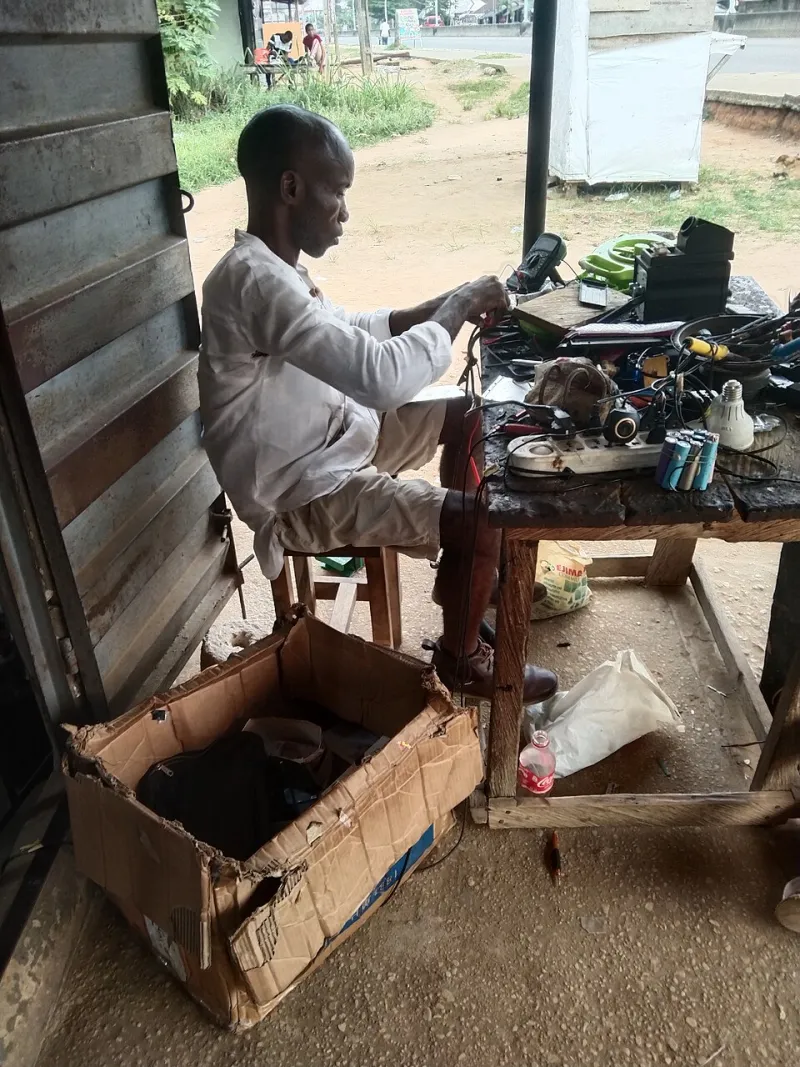
Photo: Andikan Efiok Eduok, CC BY-SA 4.0, via Wikimedia Commons
A donated water pump can become a monument to good intentions within eighteen months. The same is true of a solar kit with a failed controller, a laptop without a charging port, or a clinic refrigerator that no local technician will touch. In US–Cameroon partnerships, the purchase is often the easy part. The harder question arrives later: who repairs this equipment, with what parts, and under whose authority?
The answer belongs in the partnership agreement before the first invoice is paid. A serviceability covenant—a short, practical set of commitments attached to any equipment donation—protects the donor's investment and the community's time. It also keeps US-funded projects from becoming tomorrow's electronic waste.
From Purchase Order to Care Plan
Procurement decisions shape the afterlife of every device. A model that is common in Cameroon, or at least in the nearest regional city, is easier to maintain than a bargain model available only through a US supplier. A pump with standard fittings will outlast a pump with proprietary connectors. A laptop with a widely available power adapter will survive longer than one requiring a special order.
US churches, foundations, alumni groups, and family associations often buy equipment through state-side channels because it feels efficient. That efficiency can disappear when a replacement part must cross the Atlantic. The serviceability covenant asks a simple discipline: before purchase, identify how the item will be repaired in Cameroon, not merely how it will arrive.
This is not a demand for perfect local supply chains. It is a demand for honesty about them. The covenant should be written at the term-sheet stage, not added as an annex after handover.
The Four Commitments of a Serviceable Gift
A workable covenant can be brief. It needs four commitments, each named in the agreement and each assigned to a responsible party.
First, identify a local repair pathway. This means a named technician, shop, or regional service point—not a vague promise to find someone later. Record the contact, the location, and the expected response time. For solar equipment, the pathway may be a technician in a nearby town. For clinic devices, it may be a biomed technician attached to a district health facility. The point is to know the route before the equipment needs it.
Second, budget for consumables and replacement parts. Filters, fuses, batteries, seals, printer cartridges, and pump membranes are not optional extras. They are the cost of keeping a gift alive. A sensible proposal separates capital cost from a serviceability reserve, and states who holds that reserve. For larger equipment, the partnership may agree on a multiyear parts allowance rather than a single handover purchase.
Third, maintain a bilingual equipment register. Every serial number, supplier, warranty term, part number, and service contact should appear in English and French. The two versions should match, not merely summarize each other. A register that lives only in English excludes the technician most likely to use it.
Fourth, train at least two named custodians before handover. One custodian is a single point of failure. Two are a system. The training should cover routine checks, safe shutdown, fault reporting, and the limits of user repair. A signed training record—date, names, topics, and trainer—turns an intention into evidence.
Budgeting the Unseen
US donors are often generous at the point of purchase and quiet at the point of maintenance. The serviceability covenant corrects that imbalance. It asks the partnership to state a realistic annual figure for parts and service, even if the figure is modest.
For solar equipment, the largest future cost may be battery replacement. For water systems, it may be pumps, seals, and filters. For computers, it may be power adapters, keyboards, and storage. For clinic devices, it may be calibration and proprietary sensors. None of these costs are mysterious. They are simply easier to ignore during a ribbon-cutting.
The covenant should also name the purchasing authority. If a US organization controls every parts order, the local custodian cannot respond quickly. If the community controls the fund without records, the donor cannot verify stewardship. A middle path—a small local petty-cash threshold with receipts and quarterly reporting—usually works better than either extreme.
Documentation That Travels
Equipment records should be useful to a technician who has never met the donor. That means part numbers, not brand slogans. It means wiring diagrams where available, warranty claim instructions, and plain-language troubleshooting notes. It means photographs of installed equipment and of the spare parts cabinet.
Bilingual documentation is not a courtesy. In Cameroon, a French-only manual can sideline an English-speaking custodian, and an English-only register can do the same in reverse. The covenant should require both languages for the register, the handover receipt, and the service contact sheet. Where translation is imperfect, the partnership should agree on which version governs.
Exit Without Abandonment
The test of a donation is not the handover ceremony. It is the first repair. A closeout file should include the parts inventory, the service contacts, the training records, and a short note on known weaknesses. If the US group is winding down its presence, the local custodian should still hold the authority to order routine parts and call the named technician.
A serviceability covenant does not make equipment immortal. It makes the partnership honest about mortality. It says, in effect: we are not sending hardware into a community and walking away from its care. We are funding a relationship between equipment, technicians, and records that can survive our departure.
Before the next check is written, ask the plain question: would we fund this equipment if we also had to keep it running for five years? If the answer is no, the procurement plan needs revision. If the answer is yes, the spare-parts clause belongs in the agreement—not in an afterthought.