Knowledge With a Return Address: Contracting for Trainers Who Stay in Cameroon
Photo: Neboysha87, CC BY-SA 4.0, via Wikimedia Commons
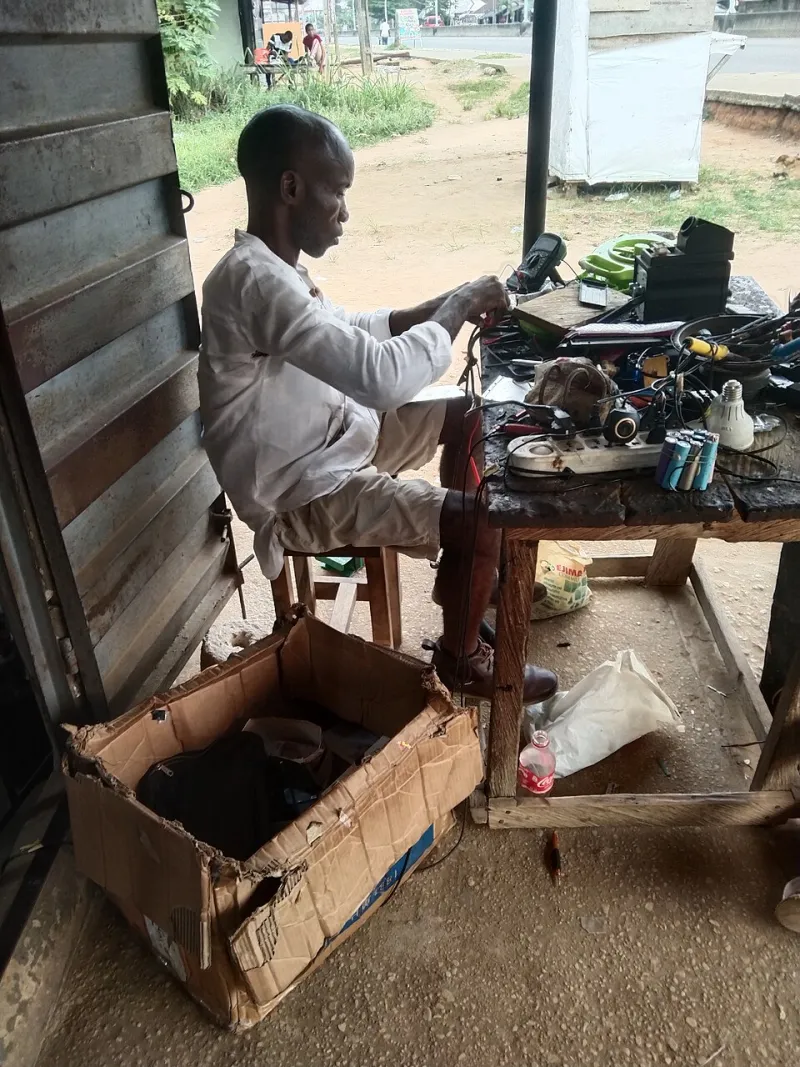
Two years after a US church group installed a solar-powered water kiosk in a village outside Garoua, the pump's controller failed. The group had trained a technician. He had been excellent, attentive, and the only one trained. He had also moved to Ngaoundere for work six months earlier, taking the skill and the spare controller codes with him. The kiosk sat idle for eleven weeks while emails crossed the Atlantic.
The failure was not technical. It was a drafting failure. Nothing in the agreement required a second trainer, a written competency record, or a refresher session, so none of those things happened.
Training Is a Deliverable, Not an Activity
In too many agreements, training appears as an activity line: 'conduct two workshops for local staff.' Activities cannot be verified, defended, or repeated. Deliverables can. The shift is simple but consequential: contract for a named number of certified trainers, a documented curriculum, and a manual the community owns, rather than for days spent in a room.
That shift also changes how the US partner budgets. Money moves from airfare and hotel nights toward stipends, backfill, printed materials, and follow-up visits by local trainers, which are cheaper per unit of retained skill by a wide margin.
Never Certify a Single Point of Failure
Write a minimum of two, preferably three, named trainees per critical role, drawn from different institutions where possible. A health post, a school, and a municipal works department that each hold one trained person will survive an individual's departure; a project that trains only the employee who happened to be available will not.
Name the trainees as roles where you can, not just as individuals. 'The designated maintenance lead of the water committee, plus one alternate elected by the committee' survives a change of personnel in a way that a personal name does not.
Pay for the Hours
Unpaid training is a hidden subsidy extracted from people who can least afford it. A farmer who loses two market days, a nurse who must arrange coverage, a teacher who travels at her own expense, all are paying for the project out of pocket while the US partner records a training cost of zero for their time.
Budget lines that make training real:
- A daily stipend for trainees, set at local day-rate norms and stated openly.
- Backfill or coverage costs for health, education, and municipal staff.
- Transport and, where overnight stays are required, lodging and meals.
- Trainer fees for the Cameroonian co-trainers who carry the sessions, since they will also be the ones answering the phone in year three.
- Printing, translation, and binding of manuals, costed per copy and per language.
Stipends deserve a candid sentence in the agreement about what they are not: they are compensation for time, not inducements for attendance, and they are paid against a signed attendance record.
Certify by Demonstration
Attendance sheets prove presence, not competence. Competency certification requires an observable task performed without prompting, judged against a written checklist, and signed by someone other than the person being assessed.
A defensible assessment package includes:
- A task list with pass criteria written in plain language, for example 'isolates the pump from the array and tests open-circuit voltage within the stated tolerance.'
- Two assessors: the lead trainer and a representative of the receiving institution.
- A dated certificate and a copy retained by the community, not only by the US partner.
- A re-assessment date, because competence decays without practice.
Where a formal national qualification exists for the trade, align the checklist with it. A certificate that connects to a recognized credential is worth more to the trainee and to the community than an internal letter.
Manuals That Survive Translation and Weather
A manual in English only, printed in full color on glossy stock, will not survive a workshop in Cameroon. Specify the format, not merely the existence, of documentation:
- Bilingual text, English and French, with key diagrams labeled in both.
- Photographs of the actual installed equipment, not stock images of similar models.
- Laminate the field copy; keep a bound reference copy with the institution.
- Version numbers and a change log, so a technician knows whether the sheet in hand matches the machine on the ground.
- A usage license that permits the community to reprint and adapt the manual locally at any time, without asking permission and without a fee.
That license clause is often omitted, and it quietly converts a gift into a dependency.
Fund the Refresher Before You Need It
Skills fade fastest in the first eighteen months. Build refresher sessions into the original budget rather than hoping for a future grant: two sessions in year one, two in year two, one in year three, delivered by the Cameroonian co-trainers with the US partner attending remotely if at all. Fund them from a named training reserve, so the money cannot be quietly reallocated to construction when the build runs over.
Measure Transfer, Not Attendance
A short set of indicators will tell you whether knowledge actually stayed:
- Certified trainers per critical role, against the target of at least two.
- Competency pass rate at first assessment and at re-assessment.
- Share of routine faults resolved by local staff without contacting the US partner.
- Median days to resolve a fault, compared with the baseline year.
- Retention of certified trainers at twelve and twenty-four months.
- Number of local training sessions delivered by local trainers alone.
Report these alongside the construction milestones. A project that finishes on time but leaves one trained person is a project with a scheduled outage.
Clause Language to Start From
The agreement should state the number of certified trainers required, the assessment method and assessors, the manual format and license, the paid training hours, the refresher schedule and its funding source, and the community's right to reprint materials. Add one closing sentence that makes the intent unmistakable: the US partner's obligation is discharged only when an assessment has been completed and recorded, not when a workshop has been held.
Trainers who stay are the cheapest insurance a partnership can buy. The clause that produces them costs less than the flight it replaces.